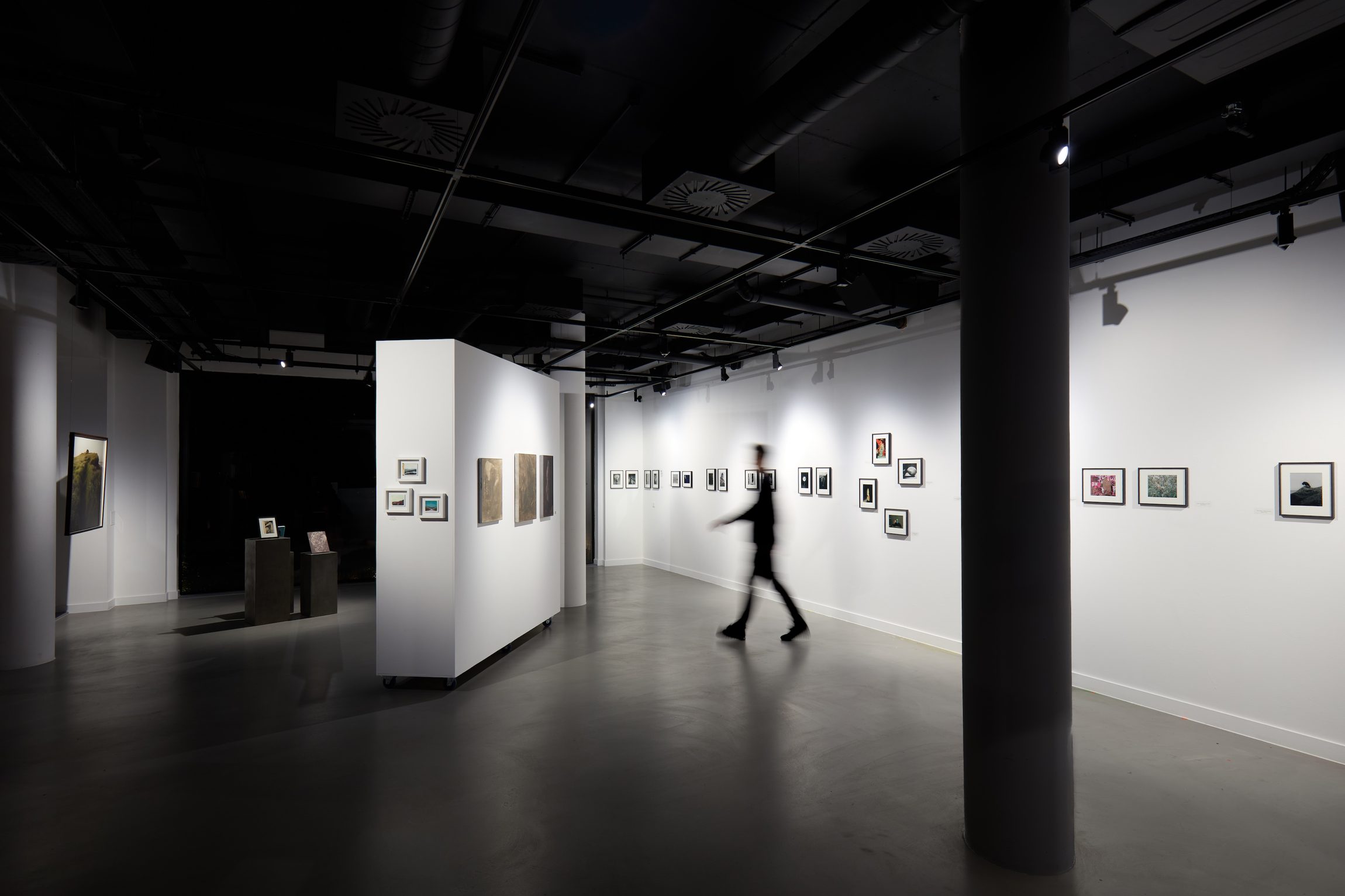
Open Doors Gallery are proud to reveal the talent discovered this year through OD Photo Prize 2026.
Founded six years ago to encourage creativity at home and support early-career artists emerging from the challenges of Covid, the OD Photo Prize has since grown into an international platform drawing thousands of entries from around the world. Its purpose remains to discover the best new talent, but each year it has also become, for me, a bellwether for the health of the medium itself. Photography has always embraced new technologies and wrestled with being a source of fact or a playground for fiction, and today’s debates only prove how relevant it remains. This year’s open call confirmed it, bringing work from a wonderfully diverse array of storytellers and practitioners, some pioneering new ways to engage with the medium, others reviving and reinterpreting historic processes. Yet, no matter the technique, it is the deeply personal bodies of work, built with patience, care and a resounding honesty and authenticity, that continue to shine through. The standard, as ever, was exceptionally high, and choosing between projects was harder than ever. Photography, it seems to me, is alive and well, and we hope you discover as much depth, beauty and urgency in these works as our jury did.

Exhibition
We hope you can join us to celebrate these talented artists listed below at the OD Photo Prize Group Exhibition in January next year. You can also sign up to our Collectors Circle to be the first to see this year’s print release.
Opening Night | 22.01.2027
Exhibition Dates | 23.01.2027 — 23.02.2027
Dandi, Battersea | 4 Haydon Way • London • SW11 1YF
Jury
Jennifer Latour | OD Artist
Paul Cupido | Artist
Elisa Medde | Art historian, editor, writer, curator
Wesley Verhoeve | Photographer, curator & writer
Robert Morat | Robert Morat Gallery, DE
Karlijn Bozon & Nadine Van Asbeck | Homecoming Gallery, NL
Olivia & Valmont | InCadaques Festival, Co-Directors
Tom Page | Open Doors Gallery, Founder & Director

OD Photo Prize 2026 | Winner
Jatin Gulati
Effigy of Man
Grand Prize Winner
Jatin Gulati
Effigy of Man
"I must undo his image in order to see him."
— Jatin Gulati, 2026
Jatin Gulati [b.1992, India] is an artist working across photography, drawing and text, whose practice explores how dominant narratives are sustained through images, systems and structures of authority. With a background in both architecture and photography, he tests the limits of the photographic image, drawing on the domestic setting, in particular the figure of the patriarch and his family’s post-Partition archive, while extending into colonial histories and postcolonial conditions in independent India. In 2025 his work received the Lucie Foundation Emerging Fine Art Award and the Experimenter Generator Grant, was shortlisted for the PhMuseum Photography Grant, and was screened at Fotofestiwal, Kranj Foto Fest and Verzasca Foto Festival. He recently completed PhMuseum’s eight-month IDEA Masterclass with Adam Broomberg on a scholarship, and teaches in the Contemporary Arts Practice programme at Srishti Manipal Institute of Art, Design and Technology in Bengaluru, where he is based.
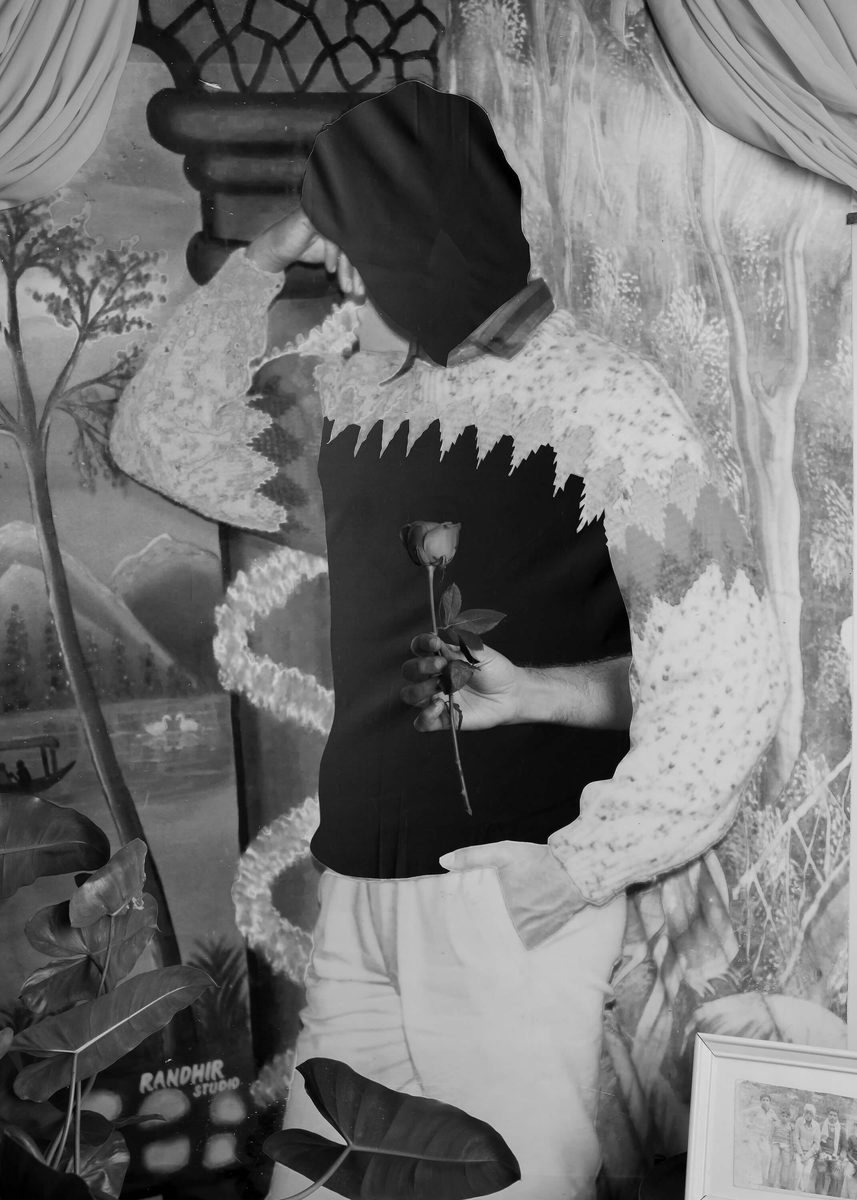
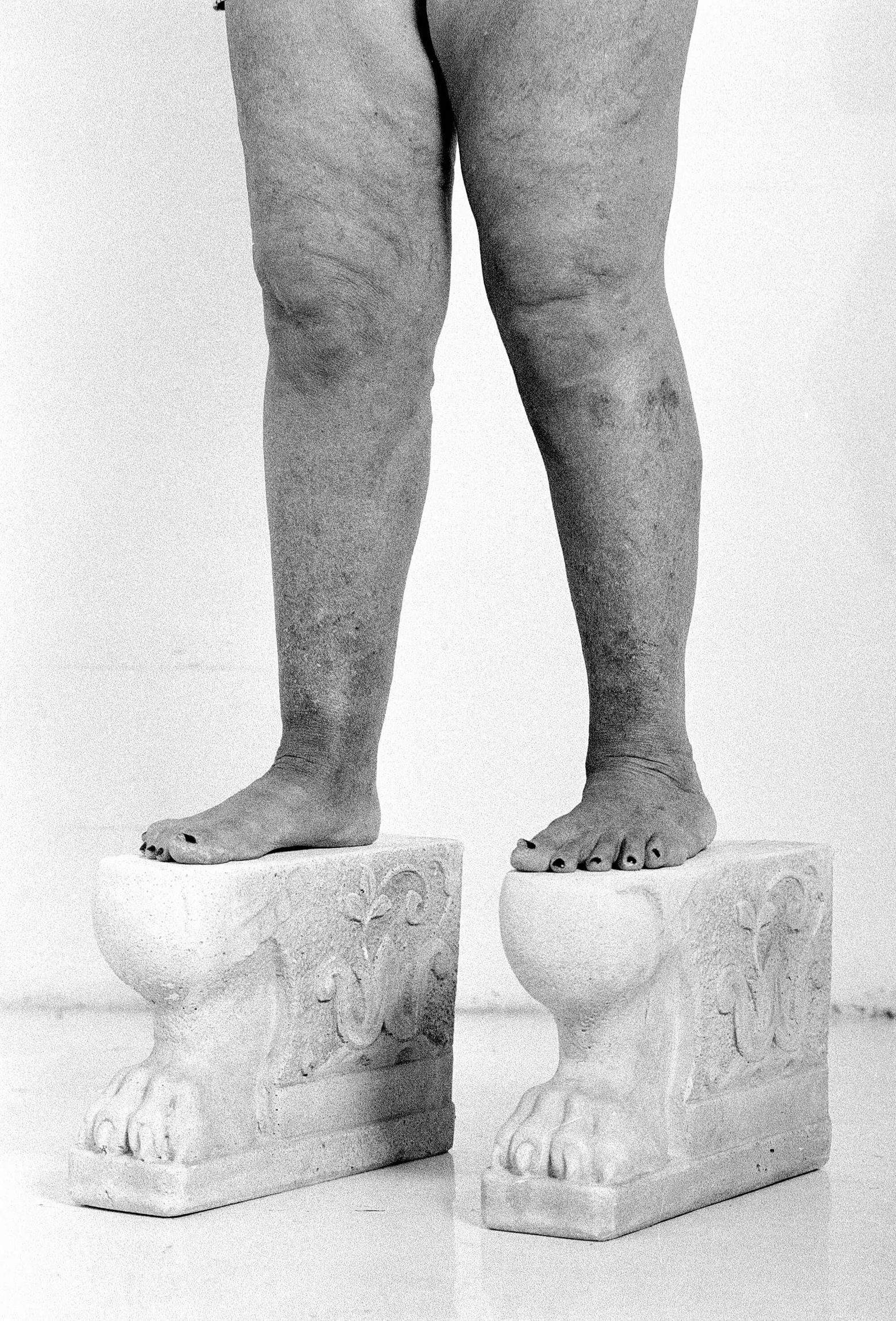
In Effigy of Man (2023–ongoing), Gulati turns to the photographs of his late grandfather, still regarded a decade after his death as the image of a revered and often feared patriarch. Strict, short-tempered and orthodox, his grandfather’s persona was shaped by the Partition of British India in 1947, when at a young age he was displaced from Multan, now in Pakistan, to Haryana. Through studio portraiture and collage, Gulati re-stages and reconfigures these images, using the studio as both a performative space and a domestic interior in which he embodies fragments of his grandfather’s photographed body. The work confronts the dominant representations of masculinity held within family archives and makes room for vulnerability and alternative masculinities.
OD Photo Prize 2026 | Runner-up
Leonardo Taddei
Lekhallen
Runner-up
Leonardo Taddei
Lekhallen
"Adulthood begins when one forgets that one is playing."
— Leonardo Taddei, 2026
Leonardo Taddei [b.1994, Italy] is an Italian artist based in Gothenburg, Sweden, whose recent work is a playful exploration of how spaces can be created, activated and interpreted through artistic practice. Working primarily in photography, he often combines the image with text and sculptural elements. He holds an MFA in Photography from HDK-Valand in Gothenburg (2023–2025) and a BA in Photography from the Libera Accademia di Belle Arti in Florence (2015–2019).
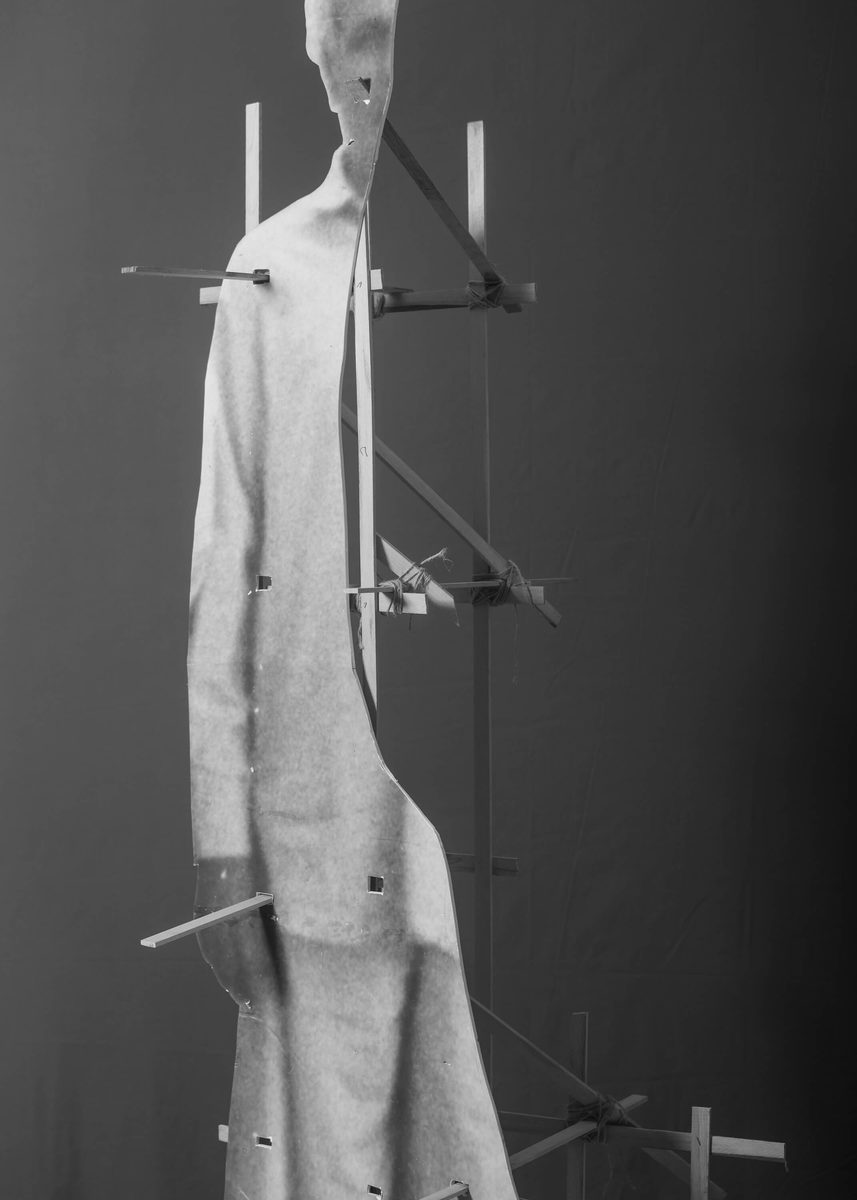
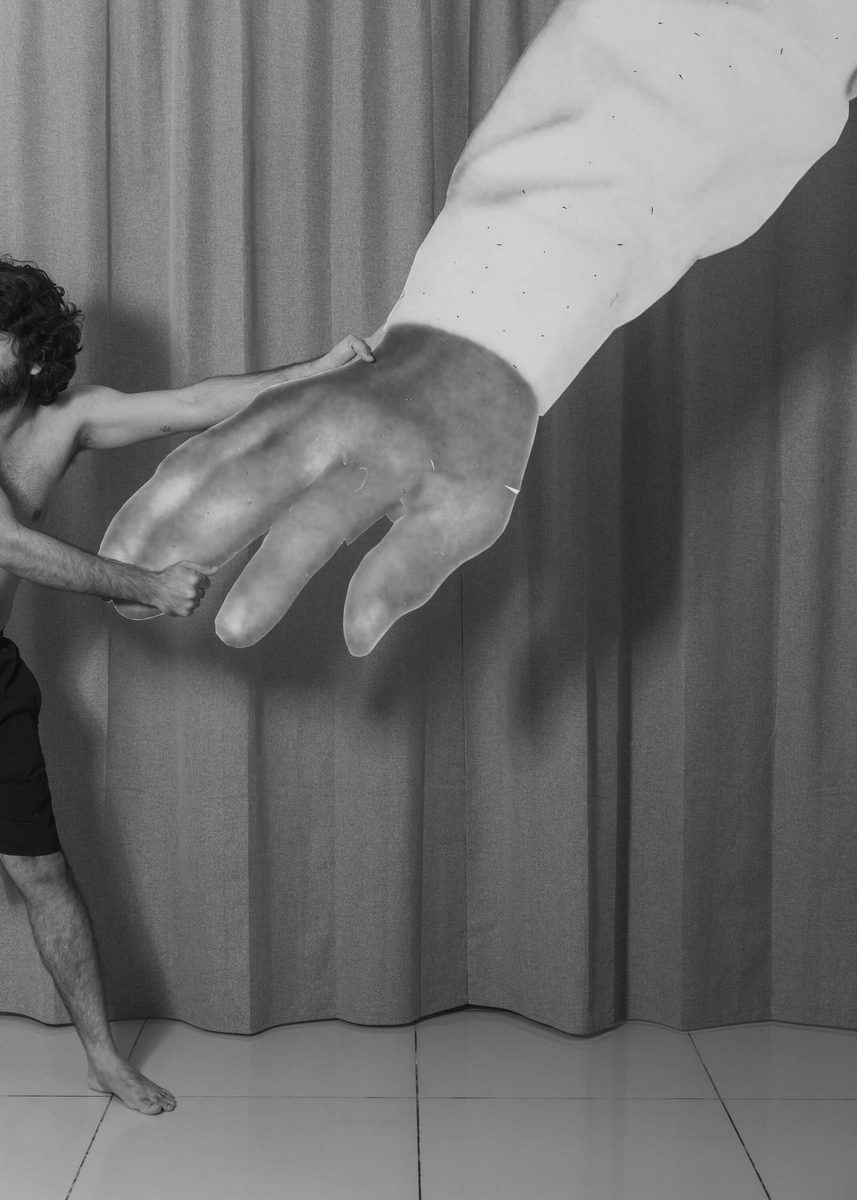
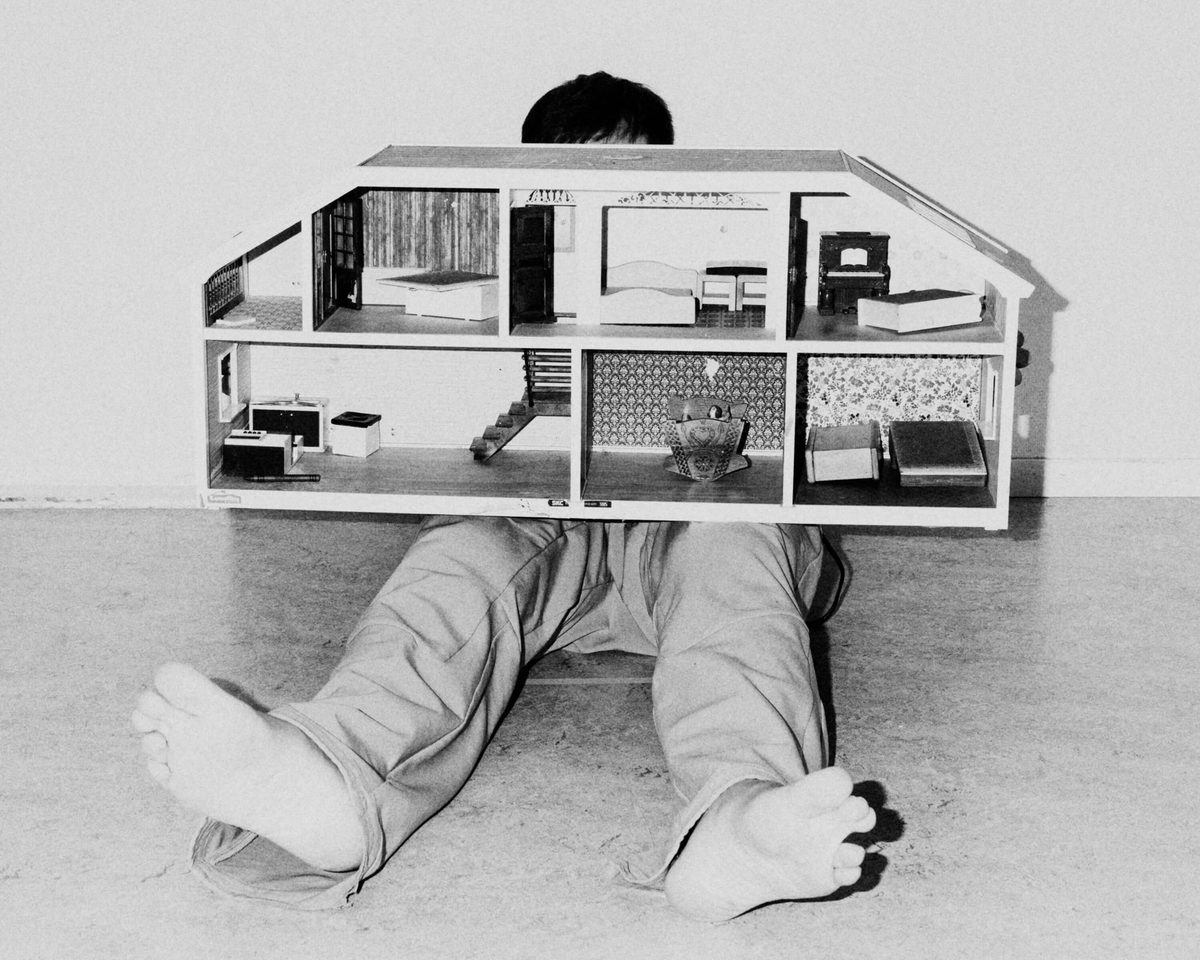
Lekhallen began in November 2023, when Taddei moved into Stacken, a housing complex thirty minutes from the centre of Gothenburg that is home to collectives, families and individuals. On its communal fifth floor sits the Lekhall, or playroom: an almost empty space with a distinctive smell. Taddei turned it into a studio and stage, inviting residents and friends to take part in anti-heroic performances for the camera. Rather than documenting play, the process activated it, so that taking a photograph became part of the game itself. Drawing on the historian Tim Stott’s idea of the playground as a space defined by its boundaries, the project considers how naming and delimiting a space creates rules, roles and hierarchies of power. Realised through black-and-white photographs and wooden sculptures, it begins from the naïve idea that adults have forgotten how to play, and arrives at another belief: “adulthood begins when one forgets that one is playing.”

OD Photo Prize 2026 | Runner-up
Elena Helfrecht
Unternächte
Runner-up
Elena Helfrecht
Unternächte
"The same fire that keeps a house warm can burn it down."
— Elena Helfrecht, 2026
Elena Helfrecht [b.1992, Germany] is a visual artist based in Bavaria whose photographic practice explores the inner space and phenomena of consciousness, emerging from an autobiographical context and opening into the surreal and fantastic. Shaped by the folklore and landscapes of her home, and by a deep engagement with art history, literature and psychology, she studied Art History in Erlangen and Berlin before completing an MA in Photography at the Royal College of Art. Her work has been shown internationally, including at South London Gallery, the Benaki Museum, Villa Kebbel and Les Rencontres d’Arles. Her awards include the BJP International Photography Award, a Sony World Photography Award and the Camera Work Award, alongside selection for Bloomberg New Contemporaries, a FOAM Paul Huf Award nomination and VOID’s Futures Photography Talents.
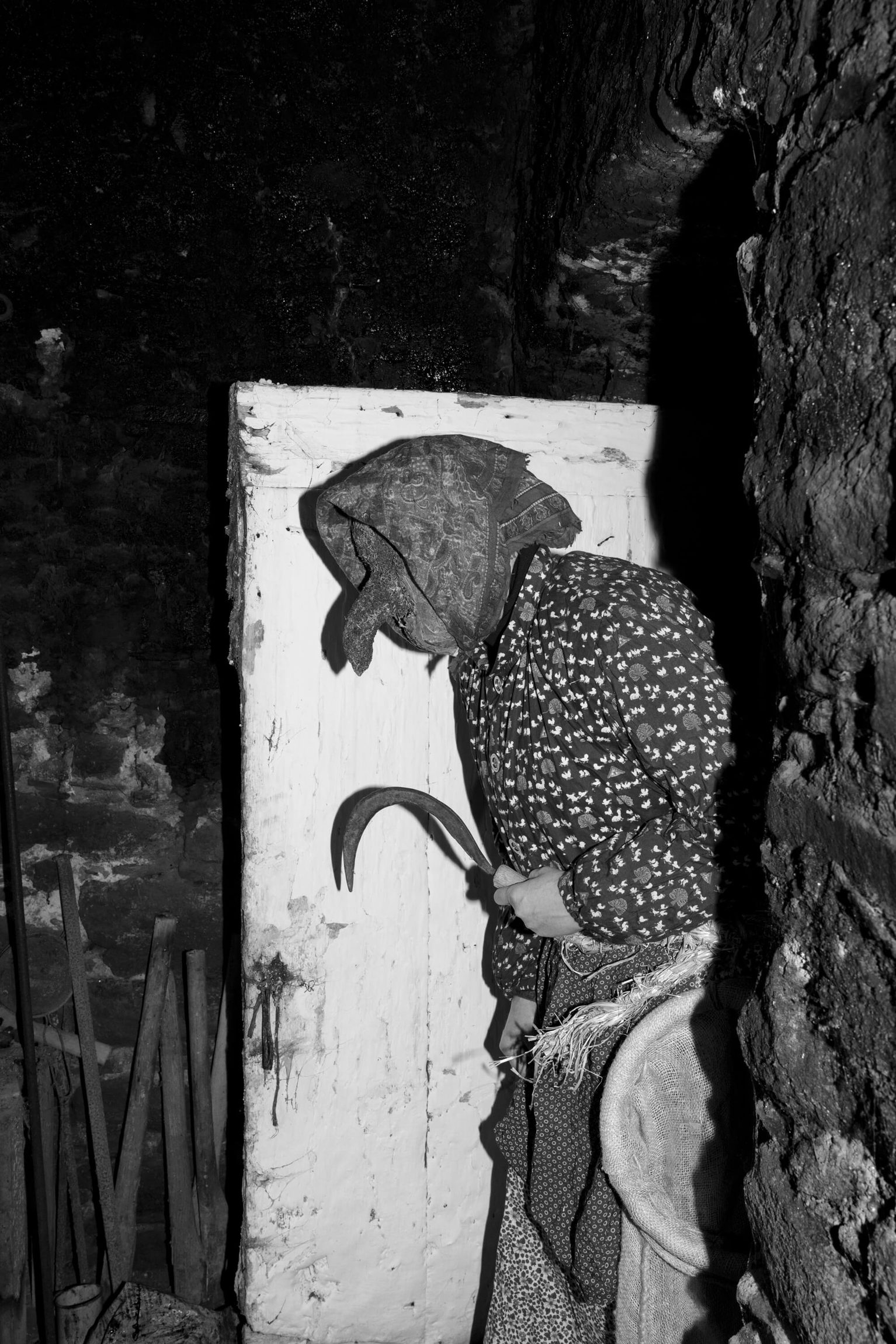
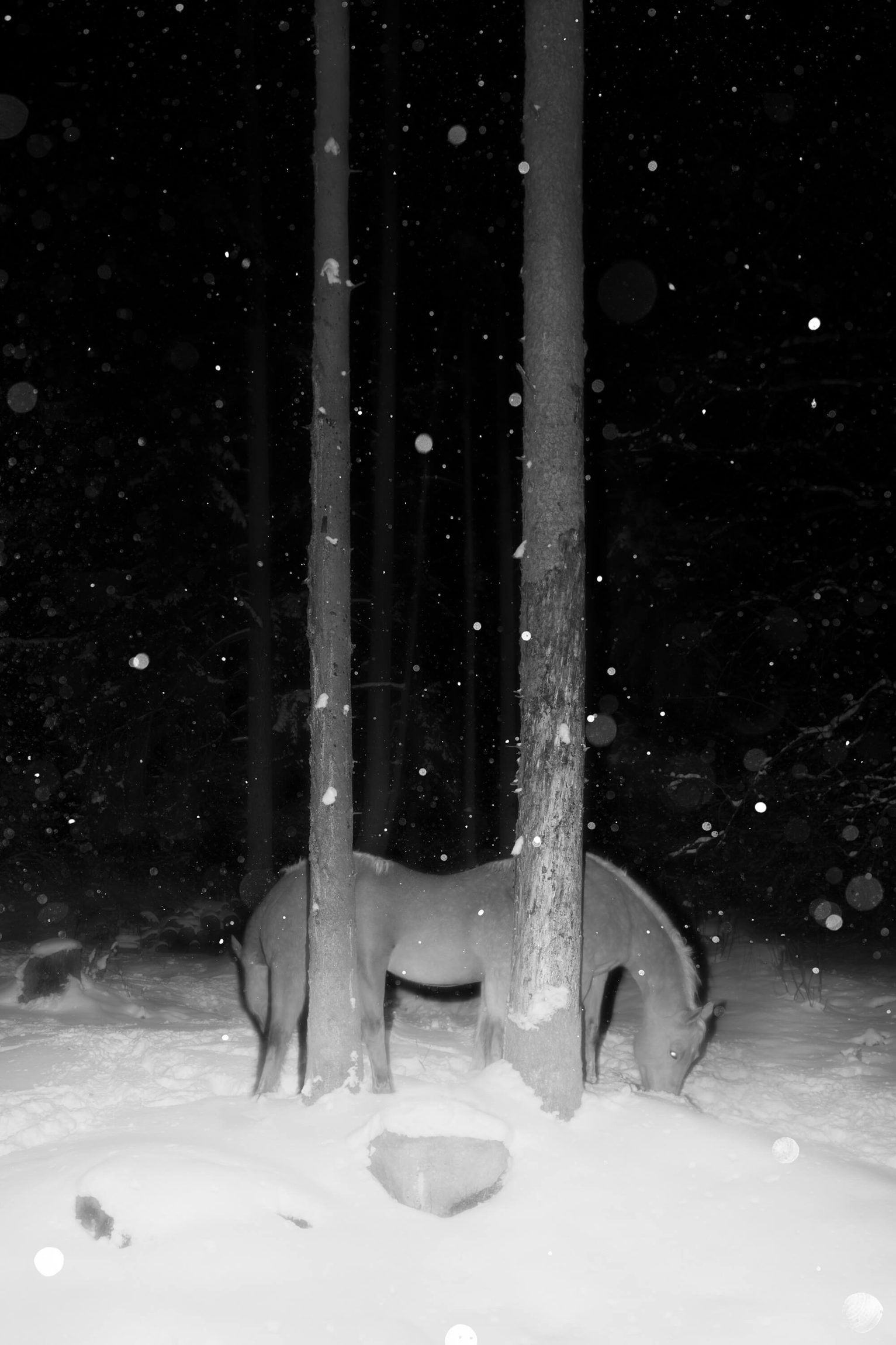
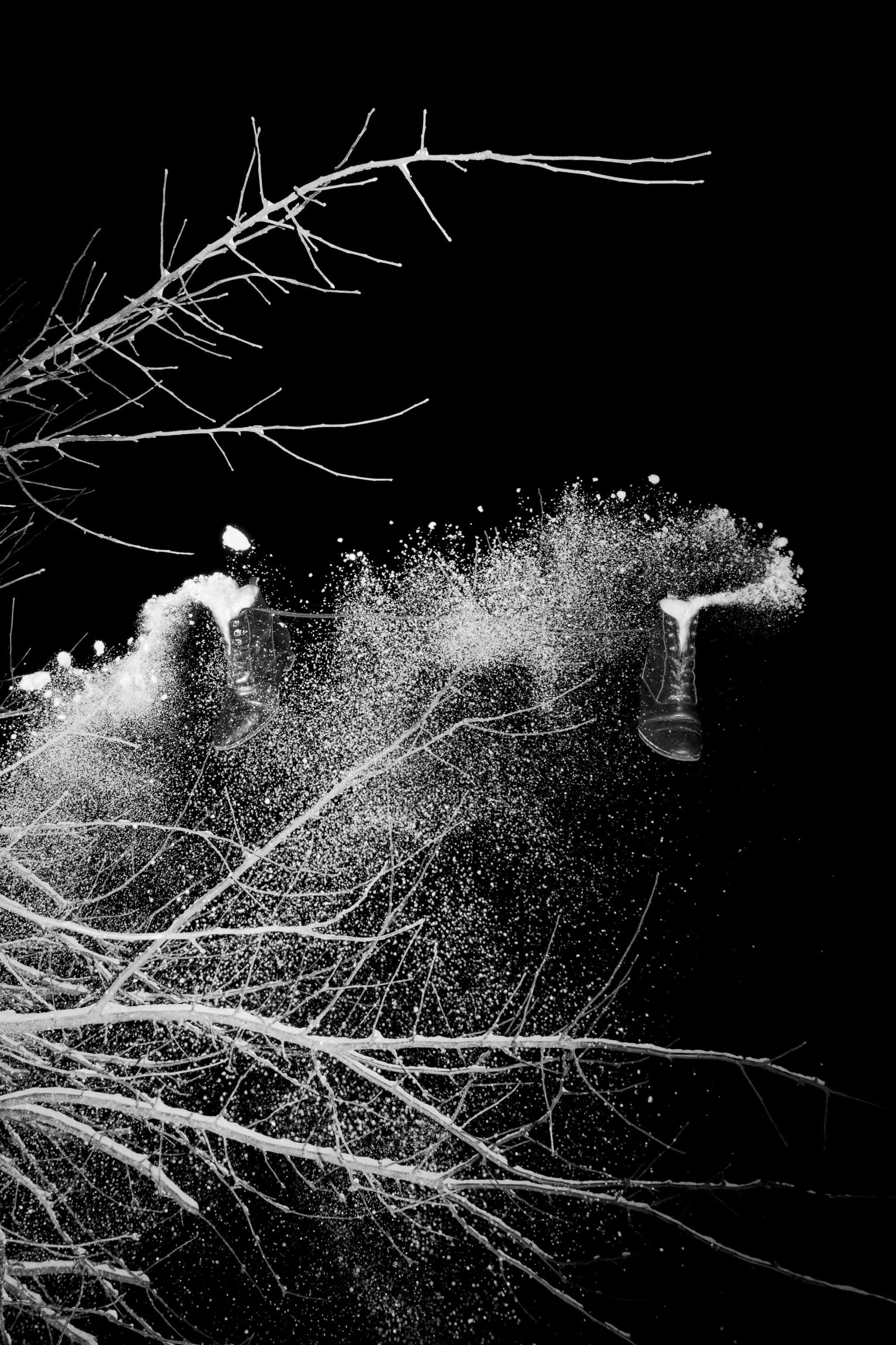
Unternächte takes its name from what Helfrecht’s grandmother and great-grandmother called the nights between the Winter Solstice and Epiphany, known more widely as the Twelve Nights of Christmas: a liminal time when, in folklore, the gates to the beyond open and spirits descend into the mortal realm. In her family, these nights were marked by tales and traditions passed down through generations of women seeking guidance on the uncertain path ahead. Helfrecht sees in that threshold an echo of our own unsettled moment, as political rifts, environmental crises and technological disorientation leave us grasping for new rituals and beliefs. Made over nine years, the series stages, re-stages and reimagines family story and local tradition until the lines between memory and invention, comfort and threat, begin to blur. Rooted in folk horror, it recognises that the beliefs which unite a community can turn against those within it as easily as those outside it. Rather than a photographic survey, the work unfolds like an old collection of fairy tales, something to return to and retell, carrying both comfort and warning. The 74-image series will be published as a book by VOID in October 2026.
2026 Judge’s Picks
Each year our panel is able to choose just one artist each, outside of their voting for the Grand Prize Winner, whose project really stood out to them and deserves a special mention. This year’s Picks are listed below and a selection of from their series will be exhibited in London.
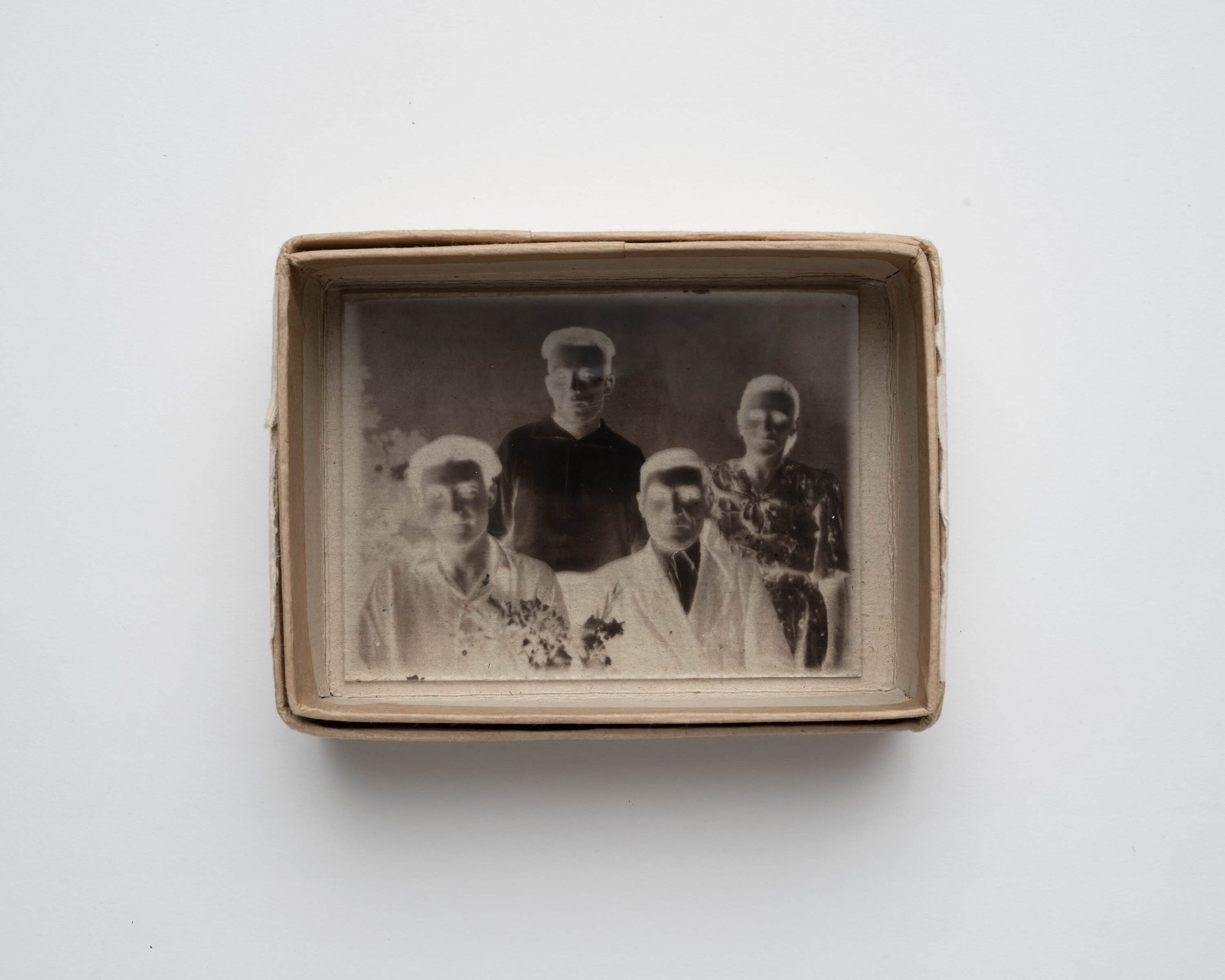
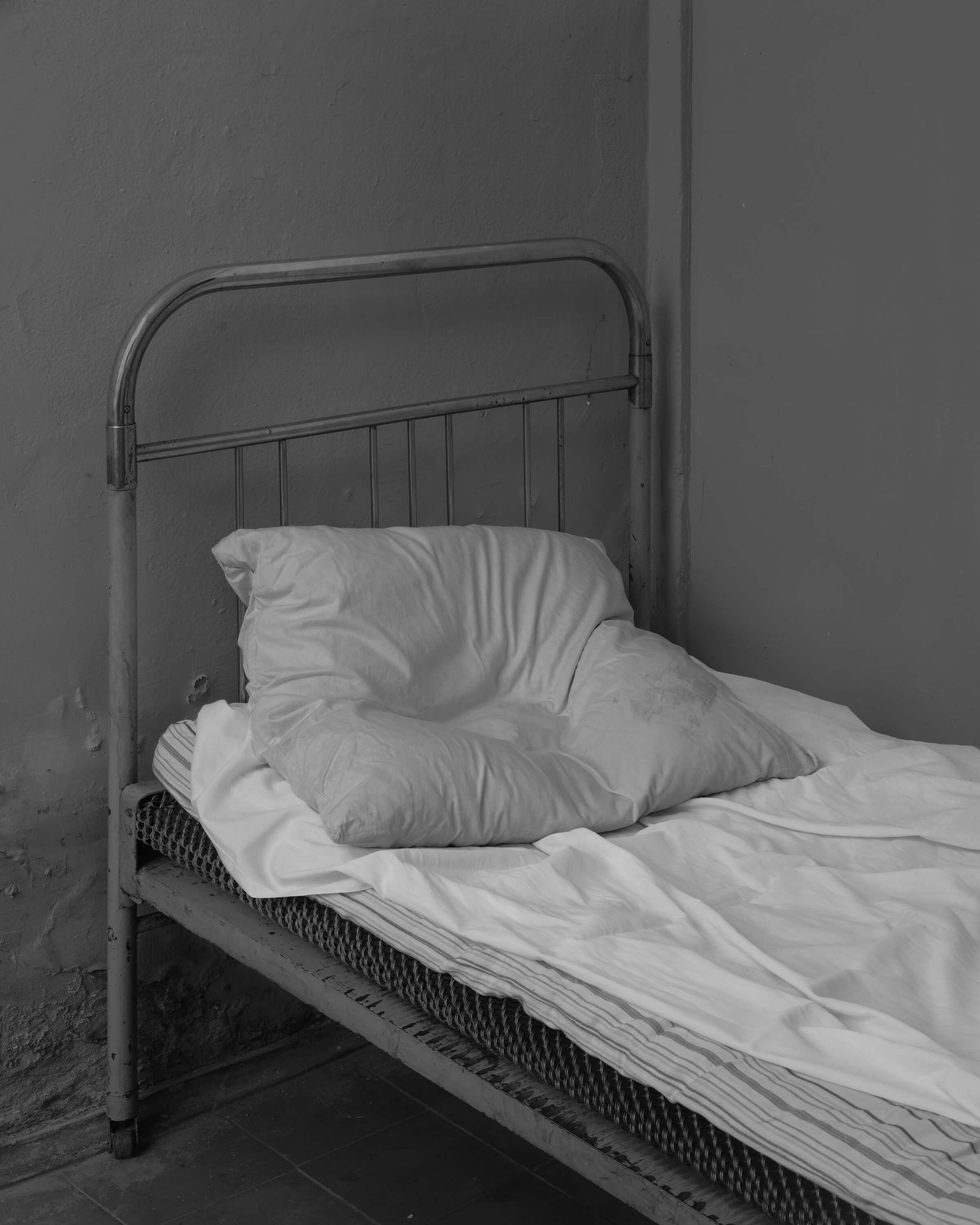
In 1954, working as an electrician, the artists grandfather witnessed a colleague electrocuted and burned to death at a transformer substation. He was later detained and physically coerced into giving testimony, and the resulting head trauma, compounded by an earlier concussion and severe combat wounds, triggered a mental illness that led to his institutionalisation. His life from then on unfolded between a psychiatric hospital and his parents’ village house, severed from his family. Learning of this hidden chapter of his family history only as an adult, the artist uses photographs, archival material and staged images to assemble a kind of mnemonic album. Filling the gaps of an absent family album not to restore the past but to build a new space of memory. It is a meditation on male solitude and inherited trauma, on the silences families keep around illness, loss and violence, and on how an artistic gesture can return visibility to a person whose life had been reduced to the unspoken.
"I chose Kirill's work for its quiet power and its deeply considered approach to memory, trauma, mental illness and silence. What moved me most is that the work does not attempt to reconstruct the past or resolve its wounds, but instead creates a space in which a life once obscured by silence can become visible again. It is intimate and deeply personal, yet it reaches beyond one family to speak to the fragile ways we inherit, suppress, and ultimately reclaim memory."

— Jennifer Latour
Erli Grünzweil
Where Deer Fly and Stones Cry
Selected by Karlijn Bozon & Nadine Van Asbeck
Directors, Homecoming Galerie
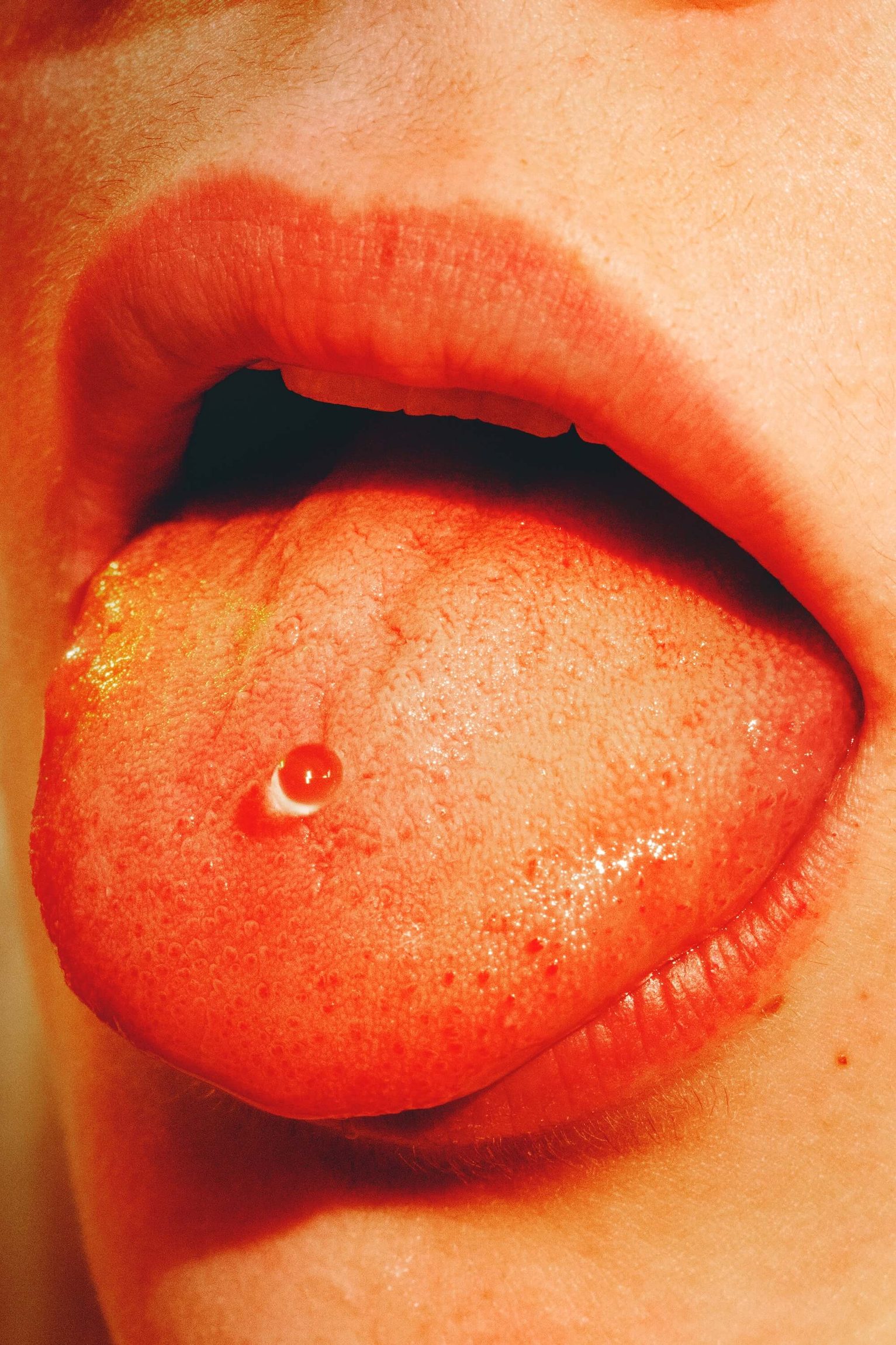
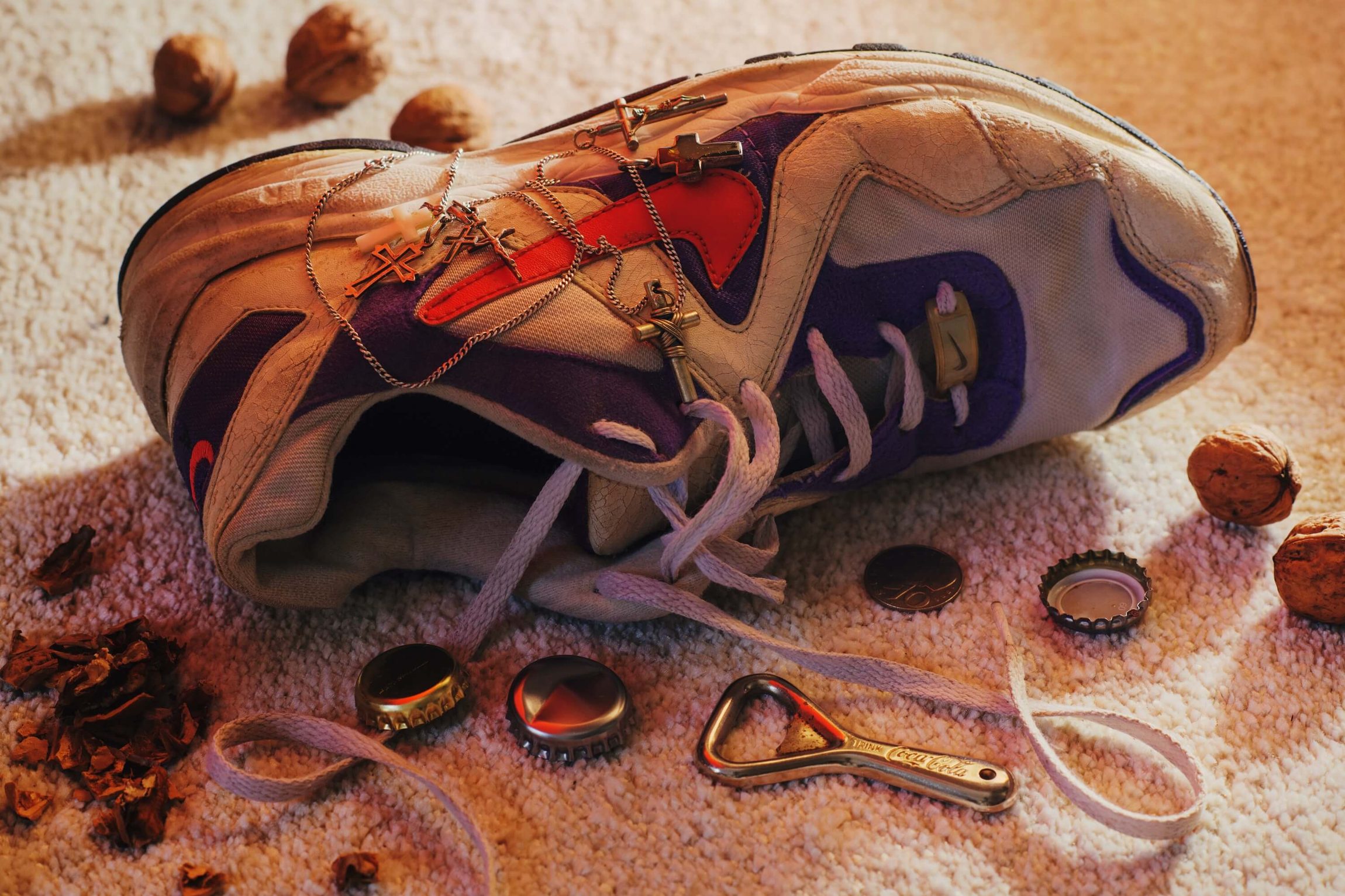
Where Deer Fly and Stones Cry is an autofictional journey that confronts the rigid binary, religious and patriarchal structures of the artist’s origins. It takes as its starting point a local legend, that a stone changed shape overnight after the Holy Family rested on it, which gave the place where they grew up its name, “Paradise”. That quiet transformation becomes a key for looking beneath a seemingly paradisiacal surface to the deeper tensions of a society shaped by addiction and suicide, and for giving voice to their experience as a non-binary person living beyond social norms. Unfolding through photographs, drawings by the artist’s grandfather and a short story, the work builds a dreamlike world where nothing is quite what it seems: a deer leaps and runs through it, only to be revealed as trapped behind fences. There are no portraits, human presence surfaces only as suggestion, reflected in animals, stones, fruit, water and smoke, and seen close the world blurs into abstraction. Blending recently staged images with photographs from the past two decades, it traces the moments between safety and threat, childhood and adulthood, stillness and change, moving between the personal and the collective to loosen the entanglement of trauma, inherited norms and conflicted identity, and to make space for new understandings of gender, belonging and liberation. The series was published as a book by Witty Books in July 2026.
"I selected Erli because there is a kind of happy-go-lucky unease running through the work that stayed with me. Once I learned that the project is rooted in an old local legend, the images took on a much more complex and layered meaning, connecting memory, place, identity and inherited structures. I love how something visually playful and seductive gradually reveals a much deeper and more personal world."

— Nadine Van Asbeck
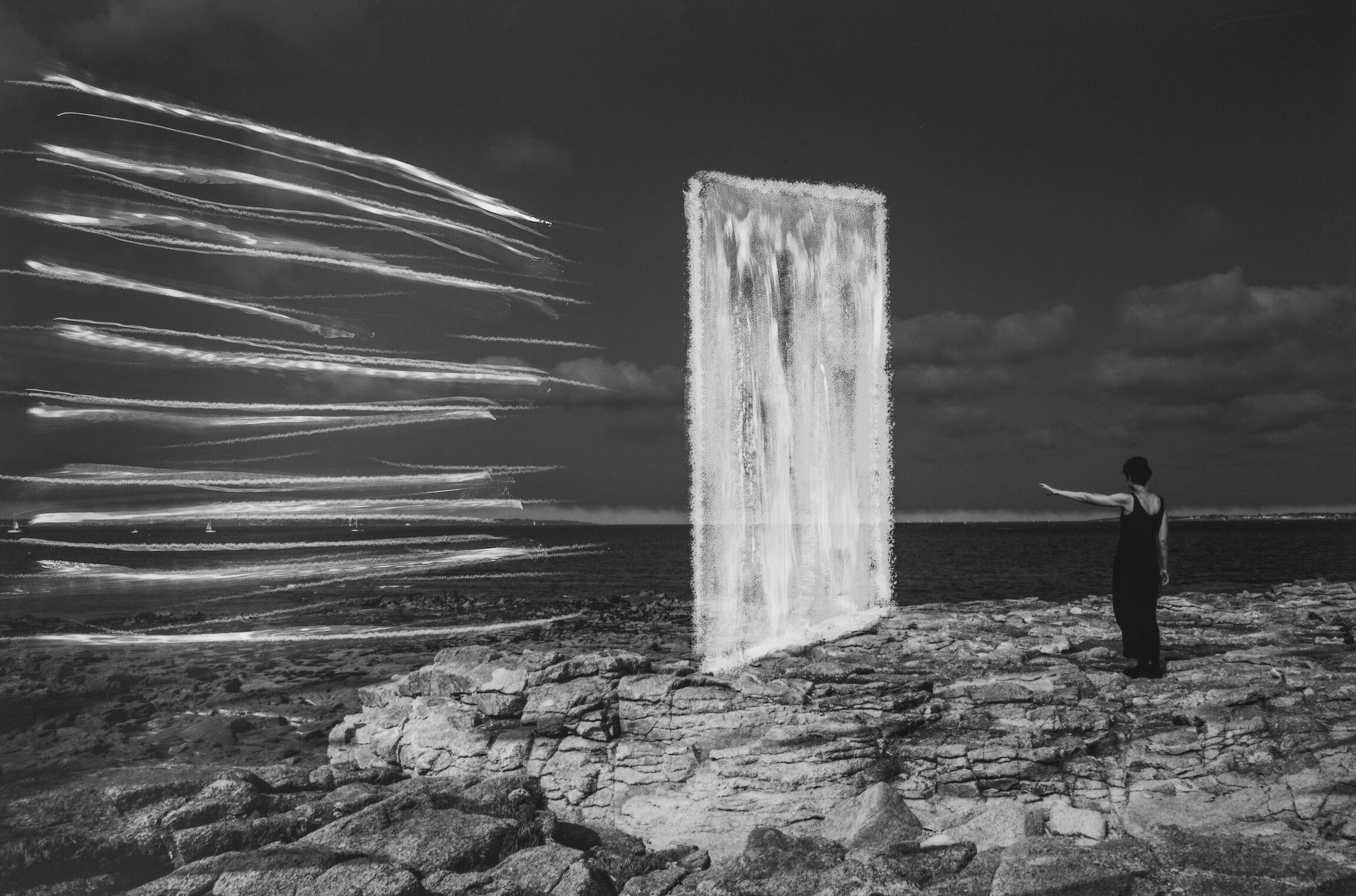
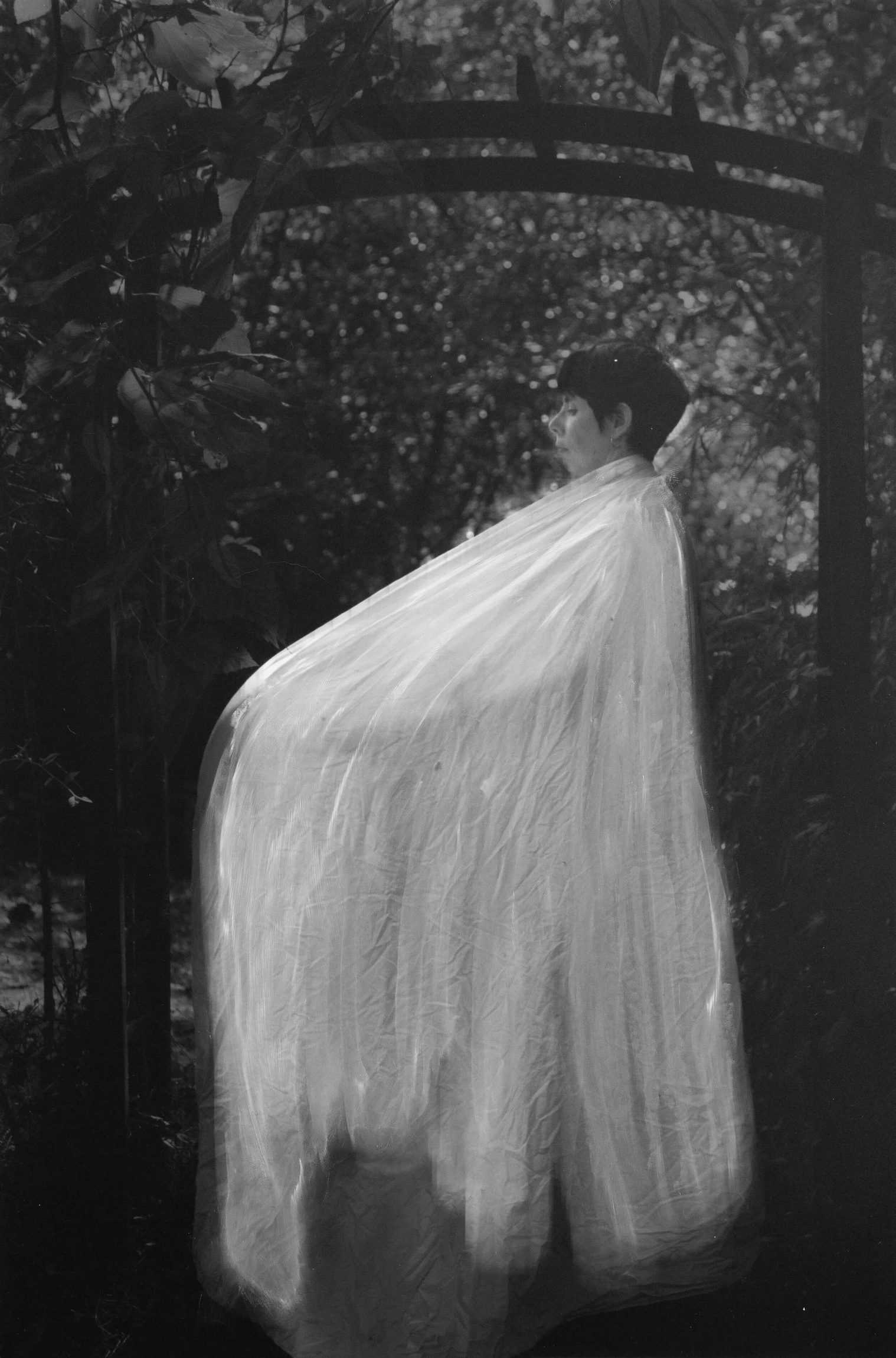
Credo. explores the new spiritualities emerging as older religious traditions recede, at the meeting point of shamanism, popular superstition, animism and ecofeminism. Perhaps trees speak to us, cats see what we cannot, the stars show us the way. Rather than assert a belief, the artist plays along, using self-portraiture to open a passage toward a possible otherworld nestled in the interstices of reality. The work is deliberately hybrid: each image is printed on photographic paper then reworked by hand with pastels and markers, a back-and-forth between the digital and the manual that makes every print a unique object and enacts a kind of threshold-crossing, an image leaving one state to enter another. That return to an embodied gesture is a conscious response to the rise of artificial intelligence, a search for breath, slowness and touch. Drawing on the principles of art therapy, in which she is trained, she conceives each image as a sanctuary where the personal meets the universal, and locates the otherworld not as a spectacular elsewhere but as a sensory layer of reality, perceptible to anyone willing to shift their gaze.
"I was immediately struck by the mystery of Sarah Bouillaud’s Credo. Exciting photographic work with luminous graphic interventions by hand. Tactile and wonderfully strange. Coup de cœur."

— Paul Cupido
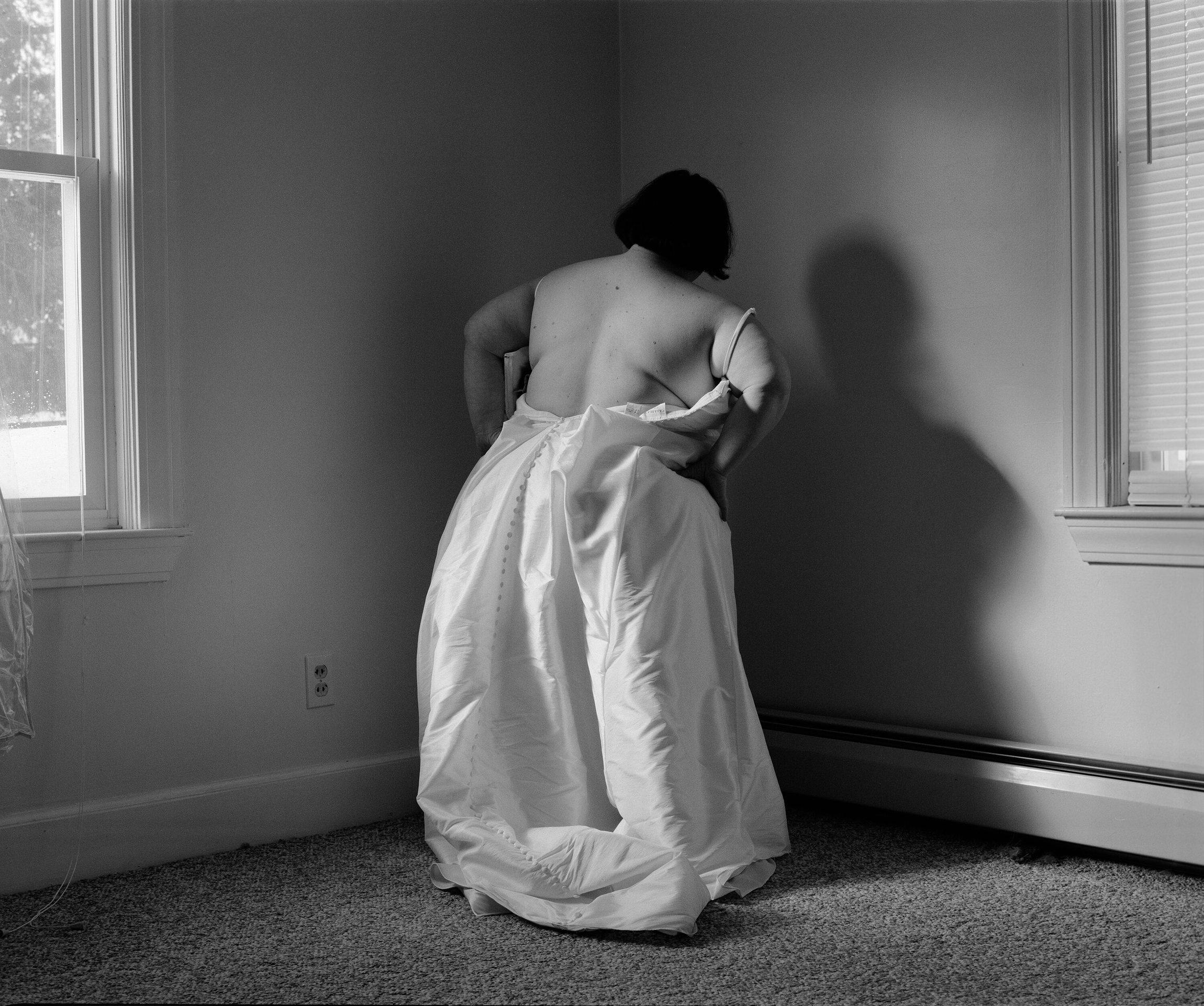
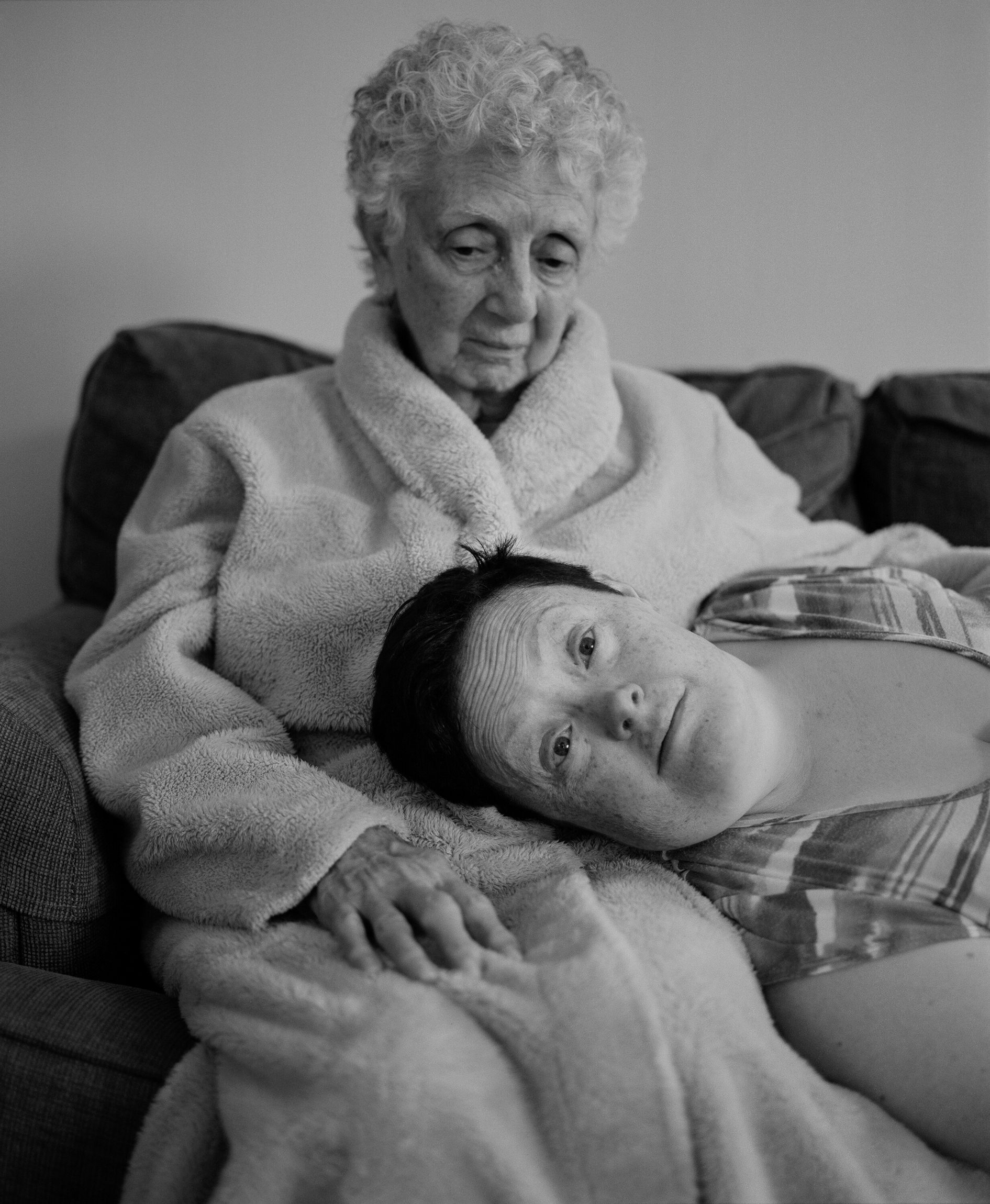
Pictures with Janet is an ongoing collaboration between Mark Fitton and his aunt Janet, a 51-year-old woman with Down syndrome, which began when Janet came to her nephew with a desire to make pictures. What started as a creative impulse has become a decade-long practice central to their relationship, with Janet not a subject but an active participant who shapes the process and unsettles ideas of authorship. Moving between everyday moments and deliberately constructed images, the work opens a shared space of exchange and gives Janet a means of self-expression, using photography as a relational practice to examine representation, identity and agency. At its heart it is an intimate portrait of a creative partnership, and of the artistic voice of an adult living with Down syndrome, expanding the conventional ways disability is pictured.
"Pictures with Janet is a collaborative project between the artist, Mark Fitton, and his aunt Janet, a 51-years old living with Down syndrome... To me, these quiet, well-crafted black+white images speak of a gentle humanity. Their quiescent sense of humor touched me deeply. "

— Robert Morat
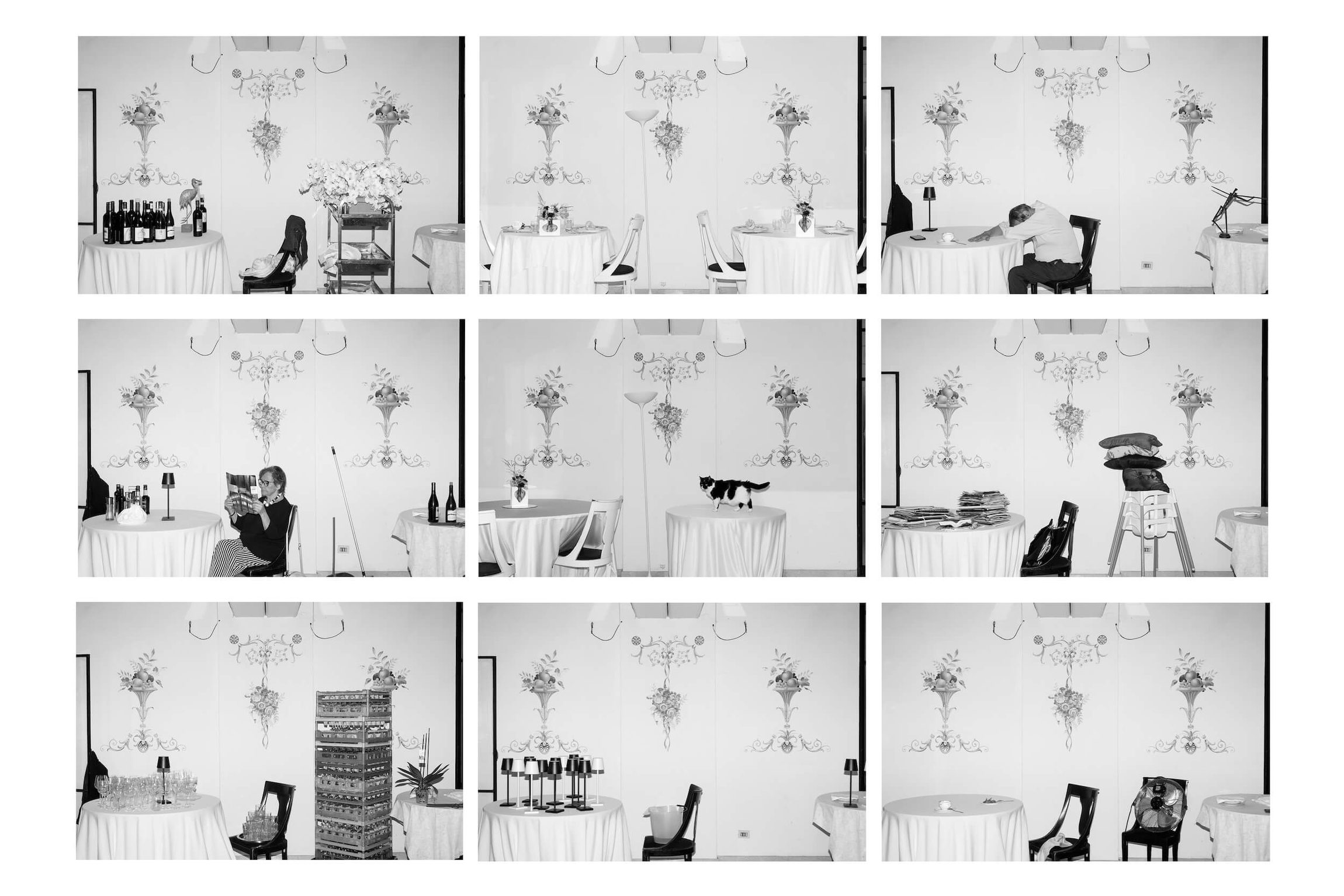
Ludovica Limido
The Feral Cat Friend of the Desert Fox
Selected by Tom Page
Director, Open Doors Gallery
This project began as an investigation into home and family, drawing from an archive of photographs the artist’s mother took at the same age she is now. The artist grew up inside a hotel her parents built and still run, a place where private life and work have always overlapped and where a small family business slowly erased the boundary between domestic and professional space. Animals were a constant presence: years before she was born, her mother took in a disabled puma cub rejected by its mother and had her own dog, newly littered, nurse it, and the puma went on to live inside the hotel with the family for nine years. A childhood that fascinated other children often left her uneasy, especially inside houses that seemed more “normal”. Here the hotel becomes a stage on which identity and belonging are continually negotiated, and by photographing its constant changes, the small apartment where her parents still live, the animals, and her family, above all her mother, whom she has often seen as a wild animal, at times caged, at times free, she builds a study that weaves observation, memory, dream and reconstruction. It asks why we construct the idea of home at all, how it binds itself to assumptions of normality, family and motherhood, and how domestic space shapes identity and carries the traces of inherited history and trauma.
"This project was a slow burner for me, but something about it kept luring me back. A box of curiosities that asks more questions than it answers. Perhaps it's the sheer eccentricity of the life her parents chose to lead, and the world she was exposed to because of it. I love it when a photographer lifts the lid on a niche corner of life, and this one has always sparked my imagination. From Fawlty Towers to Madeline, these chaotic warrens touch on all of life and invite the imagination to participate. The series opens up all kinds of questions about nurture, motherhood and what home really means. It's the kind of discovery I could never have predicted would cast its spell on me, but I'm so glad it did."

— Tom Page
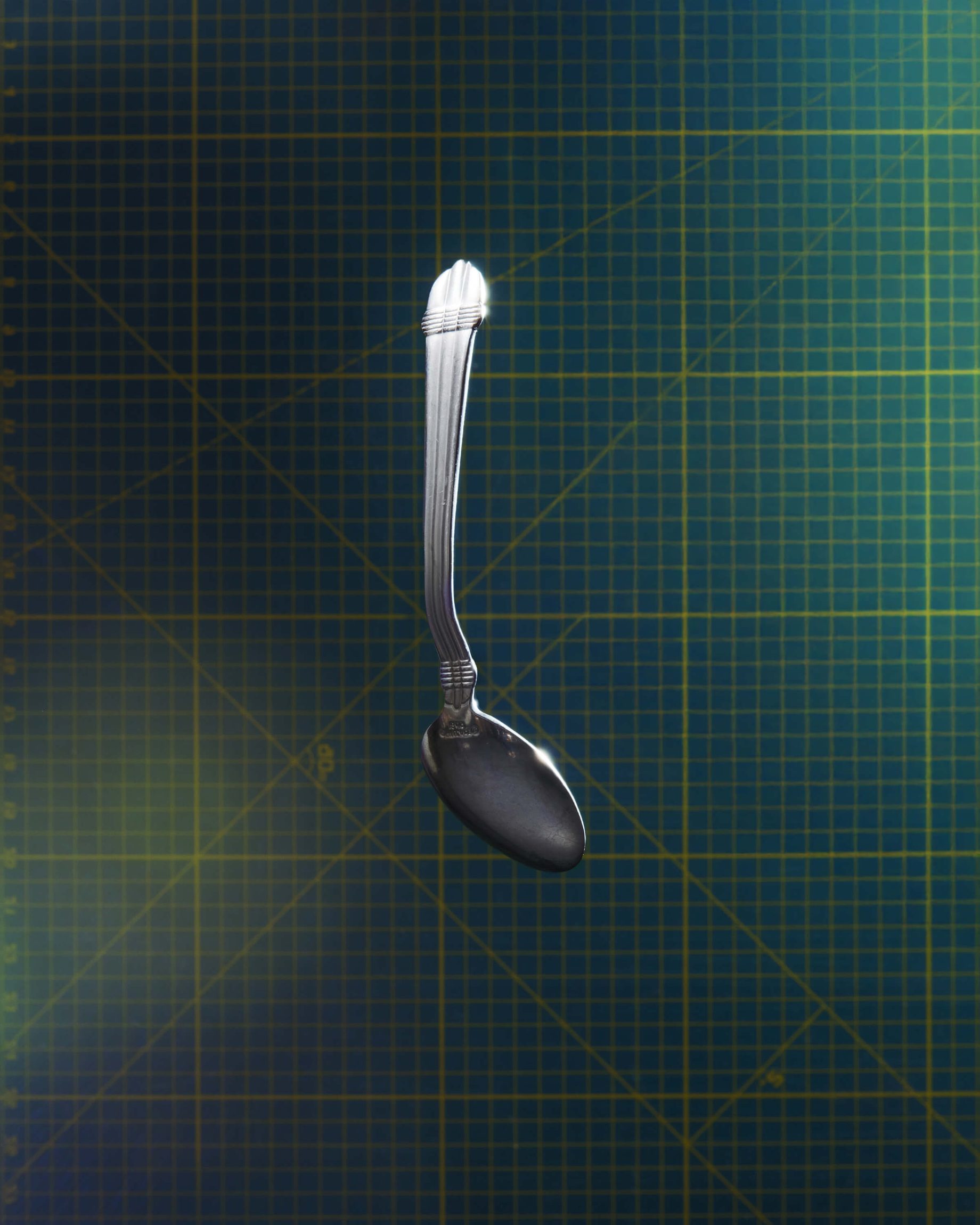

“Nothing is too wonderful to be true if it be consistent with the laws of nature.”
— Michael Faraday
This body of work draws on the CIA’s declassified Stargate Project (1978–1995), the Cold War programme that investigated psychic phenomena, and remote viewing in particular, as a possible intelligence tool. The artist is drawn to the archive as a moment when the institution tried to legitimise the uncertain, and where speculative practice was preserved as authoritative knowledge. Working mainly through staged studio photography, she constructs images that sit between evidence and construction, bringing sculptural elements, archive objects and photographic interventions into the studio and reconfiguring them so that objects perform as both witnesses and fictions. The archive here is not a stable repository but material to be handled, obstructed and fragmented, an unstable system that generates and unsettles meaning at once. The result is a photograph made into a site where authority trembles, where seeing is provisional, and where knowledge reveals itself as constructed rather than given.
Diana's project was selected by the founders of InCadaques Photography Festival, Spain. This special award within the OD Photo Prize awards one artist a solo booth at the festival each year. The festival runs 8—25 October, 2026.
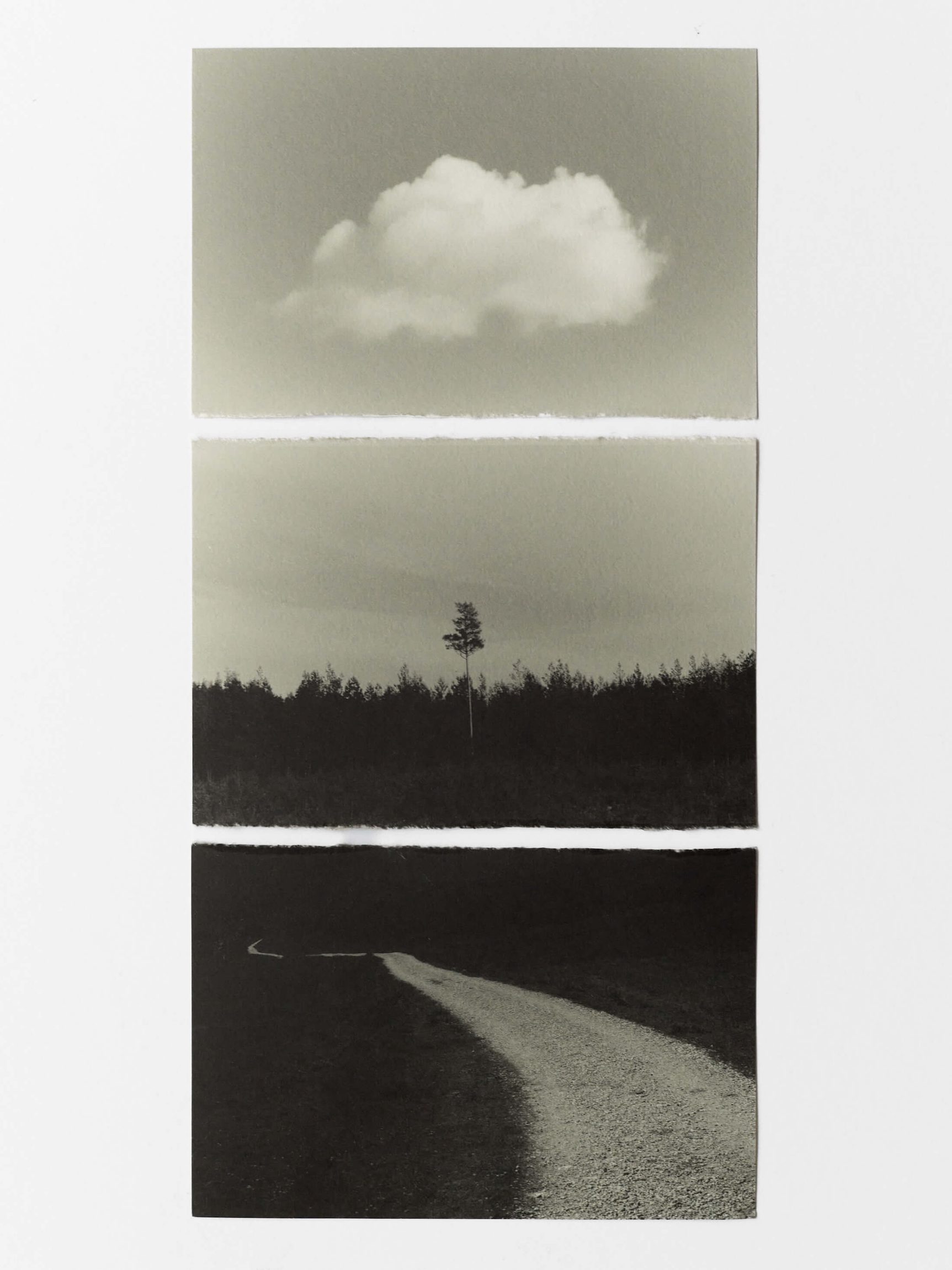
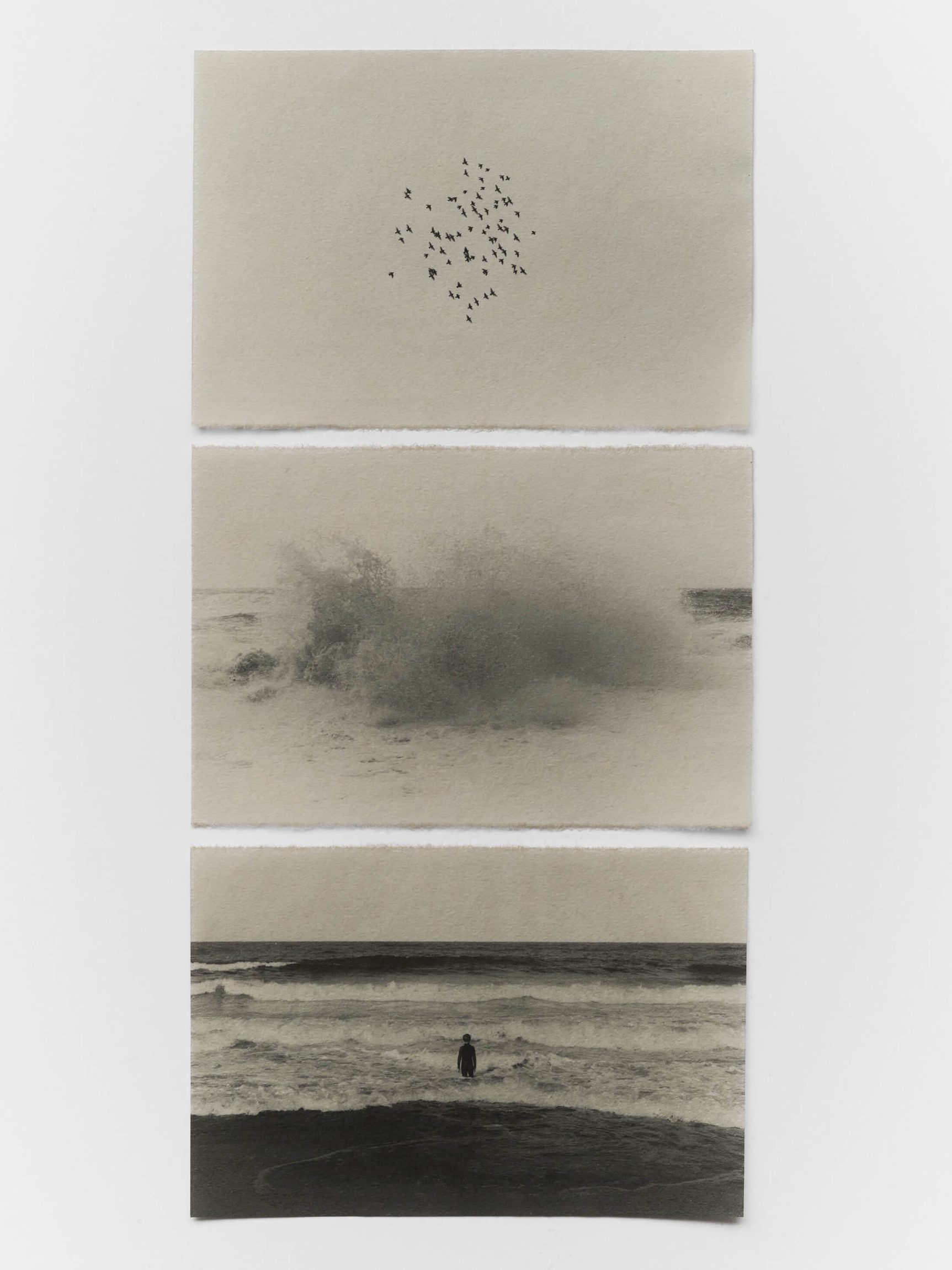
This work is concerned with what emerges when three photographs are brought into a single composition, how independent images can create a new image that existed in none of them alone. The artist photographs intuitively, following small details, simple landscapes and fleeting moments, each image made on its own with no thought of ever sitting beside another. Only later does he bring them together, discovering unexpected relationships of form, light and rhythm, so that the images begin to interact and each is perceived differently in the others’ company. He prints the photographs together, then tears them by hand and reassembles them into one composition: sometimes the tear runs between the images, becoming the very point where they meet, sometimes it appears only along the outer edge, but in both cases it does not divide them so much as mark a transition, where the photograph begins to exist in a new and expanded form.
"The fragility of Japanese washi and the small scale of the prints are not simply material qualities. They make the act of joining visible, allowing the boundary between the photographs to remain an integral part of the work."

— Taras Perevarukha
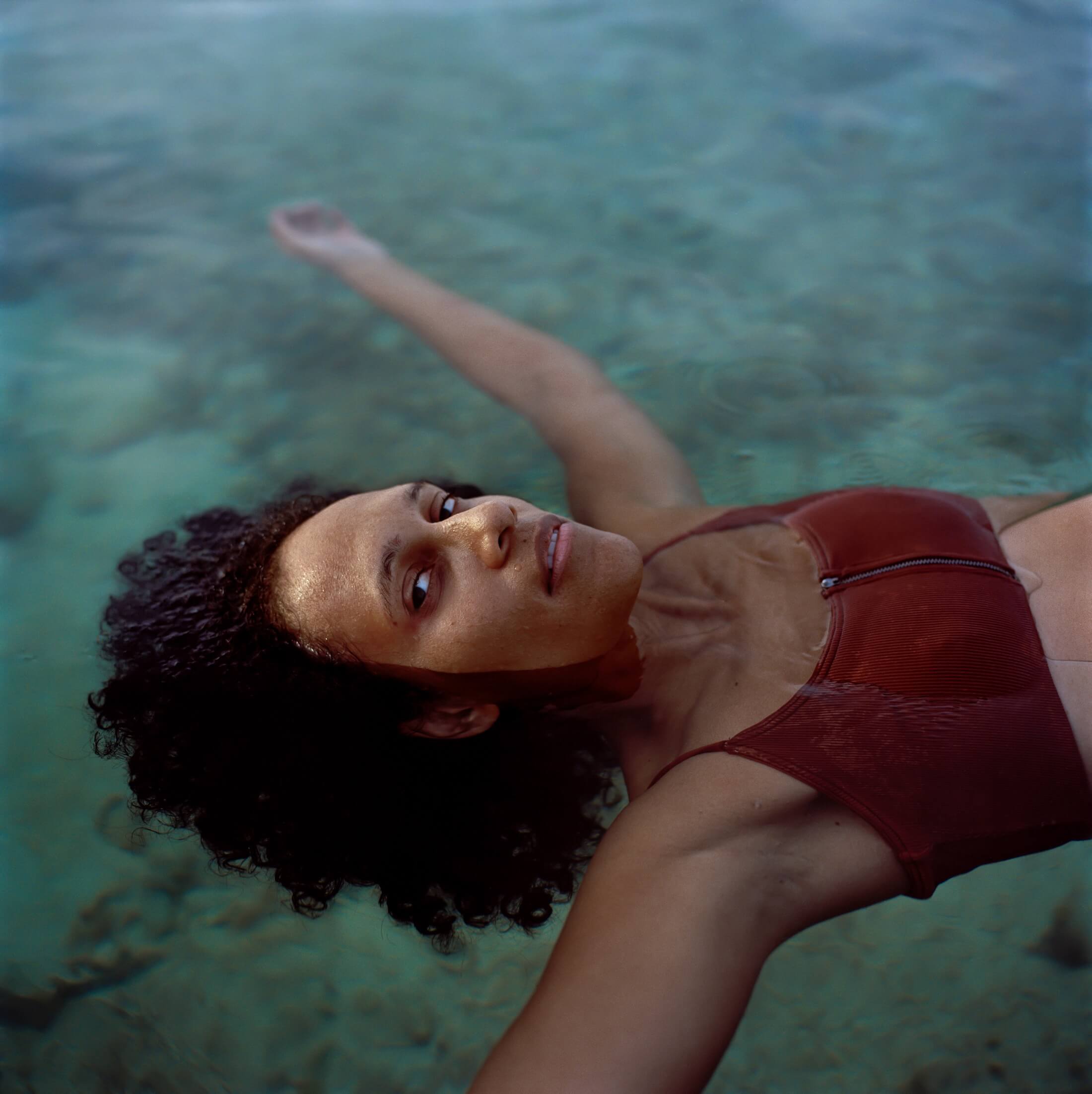
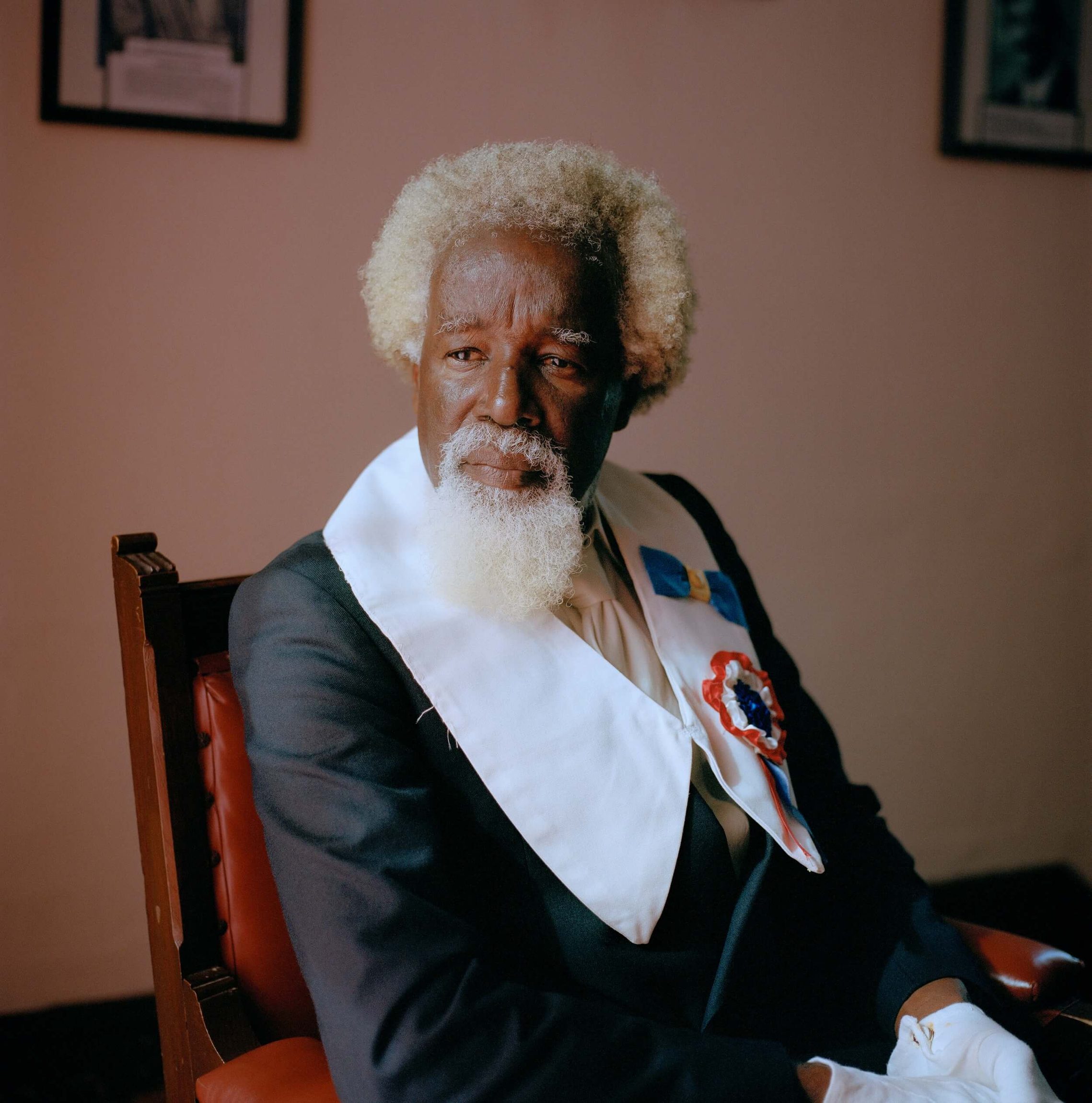
Descendants of Summer is an ongoing documentary about identity, belonging and historical reckoning in Bermuda, the 21-square-mile mid-Atlantic archipelago the artist calls home and where, to her, the picturesque cliché of paradise masks a harder inheritance. The title draws on the island’s earliest colonial name, the Summer Isles, holding together the warmth of home and the haunting legacy of empire. Bermuda became the first British colony to legalise slavery in 1616, a history that still shapes its social fabric through intergenerational trauma and fractured questions of belonging, and the work traces that impact into contemporary life, following the deeper truths held by descendants of those forcibly displaced. Born and raised on the island, the artist argues that small does not mean simple: Bermuda offers a magnified lens on the enduring structures of colonial power and resistance, and on the interconnected histories of the wider Atlantic world. Working through portraiture, landscape, archival material and oral histories, and in collaboration with local elders, historians and cultural groups, she sets out to reclaim and preserve narratives long marginalised or whitewashed. At its core it is an act of love for her community, an attempt to hold space for the beauty and pain of belonging to a place shaped by both oppression and resilience.
Nicola Muirhead is an award-winning documentary photographer and visual storyteller from the island of Bermuda. Her practice is anchored in investigating how history informs the present and shapes our current reality. Her projects are research-led and collaborative in approach, emphasising engagement with individuals and communities.
Full Shortlist
We are delighted to reveal the full Shortlist for this year’s Prize, including the artists named above. Each of them caught our panel’s attention with the power of their imagery and the distinctiveness of their storytelling. The Winner and two runners-up will be exhibited with substantial displays of their outstanding series, alongside, as ever, a selection of small prints from the Judges’ Picks. You’ll be able to see more from each of the artists’ projects across our Instagram feed in the coming weeks and months.
Vic Bakin
Sarah Bouillaud
Mehrdad Fathi
Mark Fitton
Erli Grünzweil
Jatin Gulati
Elena Helfrecht
Ludovica Limido
Thomas Martin
Joshua Mokry
Nicola Muirhead
Kirill Muniabin
Ayline Olukman
Taras Perevarukha
Alice Poyzer
Weijian Shi
Diana Sosnowska
Leonardo Taddei
Vera van Almen
Alyssa Warren
At least one more artist will join the shortlisted exhibitors through the AJ Page Public Vote Award, coming soon. We’ll be sharing a selection of standout single images from this year’s submissions over the festive period, and you’ll be able to vote for your favourites by commenting on the Instagram post.
Congratulations to everyone who submitted work to OD Photo Prize 2026. We look forward to seeing new iterations and projects from you next year.
Sign up to our Newsletter for updates on future exhibitions as well as news from our roster of artists.
OD Photo Prize Exhibition
Opening Night | 22.01.2027
Exhibition Dates | 23.01.2027 — 23.02.2027
Dandi, Battersea | 4 Haydon Way • London • SW11 1YF
Header Images
Jatin Gulati | From Effigy of Man
Ludovica Limido | From The Feral Cat Friend of the Desert Fox
Ayline Olukman | From Obsidian